What Does a Postpartum Doula Do? Services & Residential Alternatives
Understand the role of a postpartum doula in your recovery. Explore postpartum doula services and discover when a residential sanctuary offers the superior care you need.
The transition into the fourth trimester is a profound physical and emotional shift that requires more than just standard medical checkups; it demands a dedicated support system. A postpartum doula is often the first line of defense for new parents, offering a bridge between the clinical hospital environment and the realities of life at home. While their role is pivotal in easing the immediate stress of newborn care, many families find that the complex needs of maternal recovery—ranging from pelvic rehabilitation to deep emotional processing—require a more immersive environment than hourly home visits can provide. This guide explores the essential functions of a doula and why a residential sanctuary might be the more effective choice for your long-term wellness.
What is a Postpartum Doula and How Do They Support You?
Unlike a birth doula who focuses on the labor process, a postpartum doula is dedicated to the 'mothering the mother' philosophy during the weeks following delivery.
Physical and Emotional Recovery Assistance
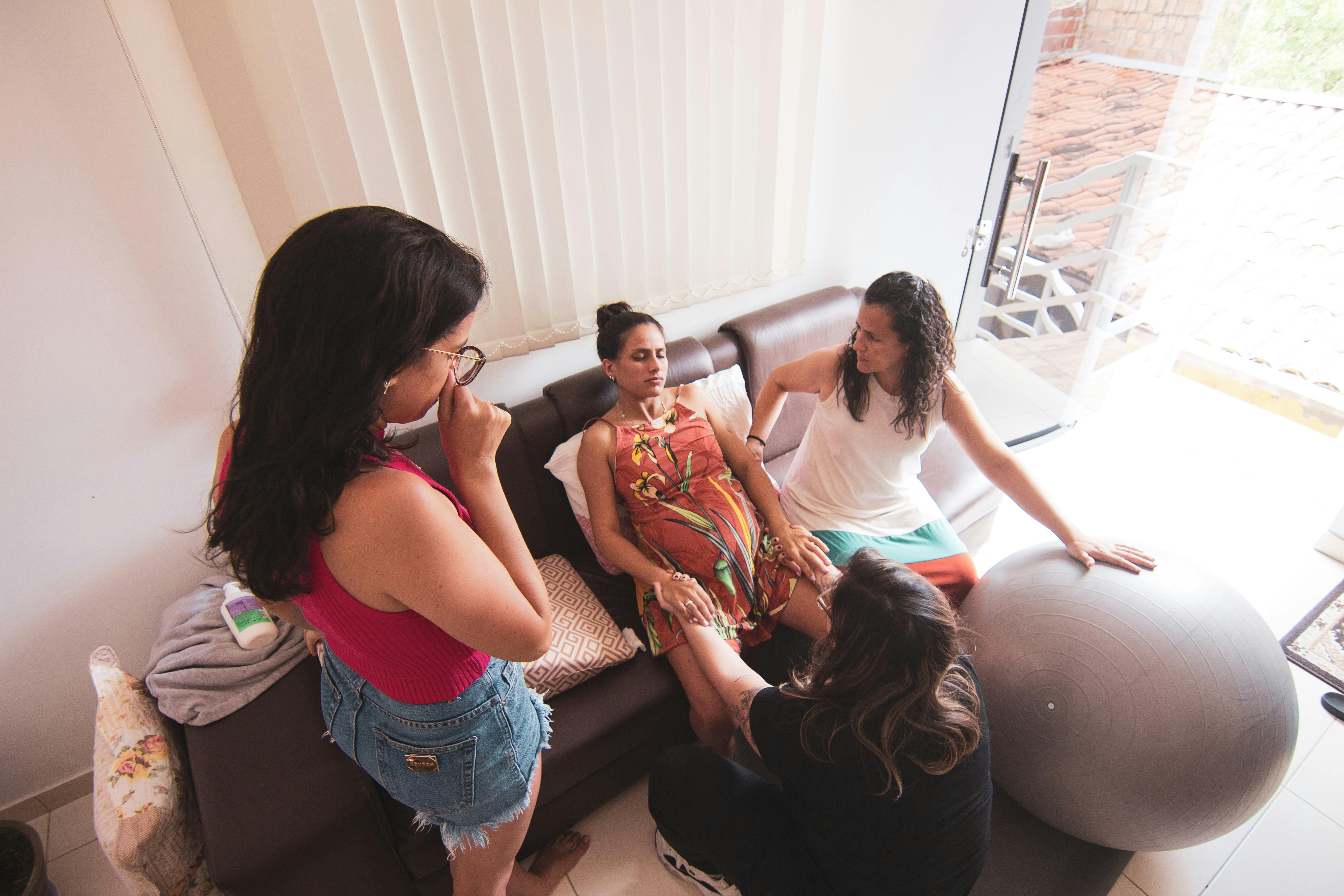
A postpartum doula provides hands-on support that stabilizes the household in the chaotic early days. Physically, this may include helping the mother with basic mobility after a surgical delivery, preparing nutrient-dense meals, and ensuring she has protected rest windows. Emotionally, the doula serves as a grounding presence—a non-judgmental confidante who normalizes the overwhelming feelings of the early postpartum period. This 'mothering the mother' philosophy is the doula's defining ethos: her primary client is the recovering mother, not the baby, because a well-supported mother is the foundation of a well-cared-for infant.
Evidence-Based Newborn Care Education
For first-time parents especially, the practical realities of newborn care can be daunting. A postpartum doula provides real-time, evidence-based education: safe bathing and cord care, swaddling techniques, reading infant cues, establishing sleep rhythms, and recognizing signs of illness. This education is delivered hands-on, in the parent's own environment, building practical competency and confidence. The doula does not take over care; she equips parents to provide it themselves, gradually stepping back as competency grows.
The Doula's Role in Feeding and Lactation Support
Feeding is one of the most common sources of distress in the early postpartum period. A postpartum doula provides foundational lactation support—assisting with latch, positioning, and feeding frequency, and identifying when a challenge requires escalation to an IBCLC-certified lactation consultant. For families choosing formula or combination feeding, the doula supports that journey with equal respect and practical guidance. The goal is a sustainable feeding relationship, however it looks for each family, rather than adherence to a single ideology.
Essential Postpartum Doula Services for the Fourth Trimester
The scope of a doula's work is multifaceted, blending practical household help with high-level emotional intelligence to stabilize the family unit.
Light Housekeeping and Nutrient-Dense Meal Prep
The domestic environment can quickly become a source of stress when parents are operating on fractured sleep. A postpartum doula manages the baseline domestic load—light housekeeping, laundry, and meal preparation—so that the parents' limited energy can be directed toward recovery and bonding rather than logistics. The nutritional component is particularly important: a doula who understands postpartum nutrition will prioritize meals that support tissue repair, lactation, and hormonal stabilization, rather than generic convenience food.
Monitoring for Postpartum Mood and Anxiety Disorders
While a doula is not a mental health clinician, a trained doula is often the first to recognize the signs of postpartum mood and anxiety disorders (PMADs). Through daily observation, she can identify shifts in mood, sleep disruption beyond the expected, bonding difficulties, or signs of emerging anxiety—and facilitate connection to appropriate clinical care. This early recognition is invaluable, as PMADs frequently go unidentified until they have significantly progressed. The doula serves as an informed observer and a bridge to clinical support, not a substitute for it.
Supporting Sibling Integration and Family Dynamics
The arrival of a new baby reshapes the entire family system, and older children often struggle with the adjustment. A postpartum doula supports sibling integration—helping older children feel included, managing the practical logistics of keeping their routines stable, and providing the parents with strategies for navigating the emotional dynamics that emerge. This whole-family perspective distinguishes a skilled postpartum doula from a newborn care specialist whose focus is primarily the infant.
Postpartum Doula vs Postpartum Retreat: Understanding the Gap
While a doula provides exceptional one-on-one care within your home, there are distinct limitations to what can be achieved in a domestic setting versus a specialized facility.
The Difference Between Support and Sanctuary
A doula brings support into your existing environment; a residential retreat moves the mother into an environment designed entirely for her recovery. This distinction is not semantic—it is clinical. The domestic environment, by its nature, carries the mental load of household management, relational dynamics, and the accumulated associations of daily life. A sanctuary removes these demands entirely, allowing the mother's nervous system to enter the parasympathetic state in which deep healing occurs. Support helps you manage your environment; sanctuary frees you from having to.
When In-Home Care Cannot Address Complex Recovery Needs
Many postpartum needs exceed the scope of in-home doula care. Clinical pelvic floor rehabilitation requires specialist physiotherapy and equipment. Deep emotional processing of a traumatic birth requires structured therapeutic support. Nutritional recovery optimized for specific physiological demands requires clinical nutritionist input. Hormonal rebalancing may require endocrine-informed protocols. A doula can identify these needs, but she cannot deliver the interventions—and coordinating multiple specialists into a home environment is logistically and emotionally taxing for a recovering mother.
Comparing Hourly Support to 24/7 Clinical Observation
The most significant structural difference is continuity. A doula provides support during scheduled hours; between those hours, the family is on its own. For straightforward recoveries with strong support, this may be sufficient. For complex recoveries—surgical delivery, breastfeeding challenges, emotional vulnerability, or lack of local support—the gaps between doula visits are precisely when difficulties arise: a 3 a.m. feeding crisis, a sudden fever, an overnight surge of anxiety. A residential retreat provides 24/7 clinical observation, ensuring that no signal goes unrecognized and no crisis goes unaddressed, regardless of the hour.
Beyond the Basics: The Amarta Method™ of Residential Healing
In Ubud, Bali, we have evolved the traditional concept of postpartum care into a clinical-grade wellness experience that far exceeds standard postpartum doula services.
Integrating Clinical Pelvic Rehabilitation
At Amarta Nurtura, pelvic floor rehabilitation is not an optional add-on; it is a core component of every recovery protocol. Every mother receives an initial assessment by a specialist pelvic floor physiotherapist, followed by a targeted rehabilitation program addressing diastasis recti, hypertonicity, or weakness. This clinical precision—delivered within the sanctuary environment—addresses the root causes of long-term pelvic dysfunction that in-home care cannot reach, preventing the cascade of incontinence, prolapse, and chronic pain that affects so many mothers years after birth.
Balinese Healing Rituals for Spiritual Realignment
The Amarta Method™ integrates traditional Balinese healing practices—Jamu herbal medicine, Boreh warming body wraps, traditional postpartum massage, and the Bengkung belly binding tradition—within a clinically supervised framework. These rituals, refined over centuries, address not only the physical body but the energetic and spiritual dimensions of matrescence. For many mothers, this integration is the element that transforms a functional recovery into a profound one—the dimension that purely clinical or domestic care consistently fails to address.
The Luxury of an All-Inclusive Recovery Environment
The luxury of Amarta Nurtura is not mere comfort; it is a clinical tool. Private villas surrounded by Ubud's rice terraces, meals designed by clinical nutritionists, 24/7 midwifery care, and the complete absence of domestic demands create the conditions for psychological safety—the prerequisite for deep healing. Every element of the environment is designed to support parasympathetic dominance, the physiological state in which tissue repair, lactation, and emotional processing occur optimally. This is not wellness as indulgence; it is wellness as clinical architecture.
Why International Families are Choosing Residential Care in Bali
For the modern global family, the 'village' must often be curated. Bali provides a unique backdrop where ancient wisdom meets luxury maternal healthcare.
Escaping the Domestic Mental Load for Deeper Bonding
The modern domestic environment is saturated with invisible labor: household management, meal planning, scheduling, relational maintenance. For a recovering mother, this mental load is not merely tiring—it is physiologically incompatible with the parasympathetic state required for healing. By physically relocating to a residential sanctuary, the mother exits this mental load entirely, freeing her nervous system to do the work of recovery and bonding that cannot occur when she is simultaneously managing a household. This is not escapism; it is a clinical intervention.
Accessing a Multidisciplinary Team of Experts
A residential sanctuary provides what no single in-home provider can: a coordinated, multidisciplinary team. Midwives, specialist physiotherapists, IBCLC lactation consultants, clinical nutritionists, traditional healers, and psychological practitioners work in concert, sharing information and adjusting the recovery protocol in real time. This integrated care model is the gold standard in postpartum medicine, and it is structurally impossible to replicate in a domestic setting where each provider operates in isolation.
The Role of Environment in Reducing Cortisol and Promoting Oxytocin
Environmental psychology demonstrates that our surroundings directly modulate our neurochemistry. Ubud's natural environment—rice terraces, rainforest, sacred waters—has been shown to reduce cortisol and support parasympathetic activation. For a recovering mother, daily immersion in this landscape provides a continuous, passive therapeutic input that supports the active interventions of the recovery protocol. The environment is, in a real clinical sense, part of the treatment—a dimension that no domestic setting, however well-appointed, can replicate.
Is a Postpartum Doula or a Sanctuary Right for Your Recovery?
Deciding on your support structure depends on your personal health goals, your existing support network, and the depth of healing you desire.
Assessing Your Physical Recovery and Risk Factors
Consider the nature of your birth experience, your physical recovery status, and your medical risk factors. A straightforward vaginal delivery with a strong partner and local family support may be well-served by a postpartum doula. A surgical delivery, a complex or traumatic birth, pre-existing pelvic floor dysfunction, a history of mood disorders, or a limited local support network all indicate that the depth and continuity of a residential sanctuary is the more appropriate clinical choice. Honest assessment of your risk factors—not your idealized vision of recovery—should guide this decision.
The Financial and Emotional ROI of Professional Support
The investment in postpartum support—whether a doula or a sanctuary—is frequently evaluated as a cost, when it is more accurately understood as a preventative health investment. Research consistently demonstrates that optimized fourth trimester care reduces the risk of long-term pelvic floor dysfunction, postpartum depression, and chronic pain, each of which carries both financial and emotional costs that dwarf the investment in structured recovery. The question is not whether you can afford support, but whether you can afford the absence of it.
How to Combine Home Support with a Residential Stay
These are not mutually exclusive options. Many of our families use a postpartum doula for the transition home after a residential stay—extending the principles and practices established at the sanctuary into the domestic environment. This combined approach leverages the depth of the residential experience for the critical early recovery, and the continuity of in-home support for the sustainable integration of that recovery into daily life. The doula, in this model, is not a substitute for the sanctuary but a bridge from it.
Conclusion
Investing in postpartum support is not a luxury; it is a fundamental requirement for a healthy transition into motherhood. While a postpartum doula offers invaluable assistance in navigating the early days of infant care, the comprehensive, clinical, and spiritual approach of a residential sanctuary like Amarta Nurtura provides a more robust foundation for long-term health. By stepping out of the domestic routine and into a space designed exclusively for maternal rebirth, you ensure that your fourth trimester is defined by rejuvenation rather than depletion. Whether you choose in-home doula services or the immersive care of our Bali sanctuary, prioritize your healing—it is the greatest gift you can give your new family.
Explore our postpartum retreat programs for a deeper level of care than traditional postpartum doula services, book a consultation to learn how the Amarta Method™ can transform your fourth trimester, or view our luxury villas in Ubud, designed for the ultimate maternal recovery experience.
Frequently Asked Questions
How does a postpartum doula differ from a baby nurse?
A baby nurse, or newborn care specialist, focuses primarily on the infant—feeding, settling, and basic care—often taking over nighttime care entirely. A postpartum doula focuses on the mother and the family unit as a whole: emotional support, recovery assistance, evidence-based education, sibling integration, and household stabilization. While there is overlap in newborn care, the doula's primary client is the recovering mother, reflecting the understanding that maternal wellbeing is the foundation of infant wellbeing.
Can a postpartum doula help with postpartum depression?
A trained postpartum doula can recognize the early signs of postpartum mood and anxiety disorders and facilitate connection to appropriate clinical care, but she is not a substitute for that care. A doula's role is supportive and observational, not therapeutic. If postpartum depression is present or emerging, a multidisciplinary approach that includes qualified mental health practitioners is essential—one of the structural advantages of a residential sanctuary with integrated psychological care.
Why should I choose a residential retreat over hiring a doula at home?
A residential retreat provides what in-home doula care structurally cannot: 24/7 clinical observation, a coordinated multidisciplinary team, a curated healing environment optimized for nervous system regulation, and the complete removal of the domestic mental load. For mothers with complex recovery needs, limited local support, or a desire for deep restoration rather than management of existing demands, the immersive environment of a sanctuary delivers a depth of healing that hourly in-home support cannot replicate.
How long is the typical stay at a postpartum sanctuary?
Stays vary based on individual recovery needs, but the most common duration is between two and four weeks, allowing sufficient time for the staged progression of tissue repair, pelvic floor rehabilitation, lactation establishment, and emotional integration. Shorter stays can provide meaningful support, but the deepest benefits emerge when the mother has adequate time to move through the biological timeline of recovery without pressure to resume domestic demands. We tailor each stay to the mother's clinical needs and personal goals.
What is included in the Amarta Nurtura postpartum experience?
Our postpartum experience includes 24/7 midwifery care, specialist pelvic floor physiotherapy, IBCLC lactation consulting, clinical nutritionist-designed meals, traditional Balinese healing rituals, psychological support and screening, private luxury villa accommodation, nursery support and overnight care, partner integration programming, and a comprehensive discharge plan for the transition home. Every element is coordinated under the Amarta Method™ framework, ensuring integrated, multidisciplinary care throughout your stay.
Ready to begin your restoration journey?
Experience the Amarta Method at our intimate boutique resort in Ubud, Bali.